

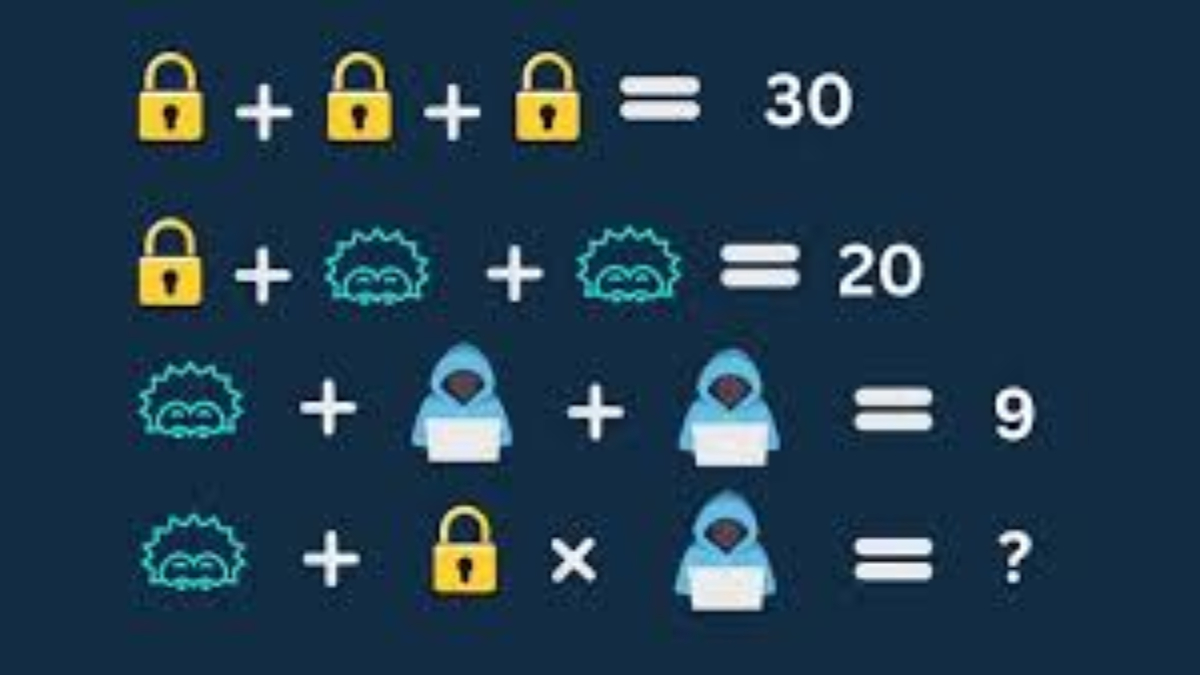
Many students ask, does it require math to build a career in cyber security? The short answer is yes — but not advanced or impossible math. You do not need to be a math genius to succeed.
Most cyber security roles rely more on logical thinking, problem-solving, and understanding systems rather than solving complex equations every day.
Cyber security professionals focus on protecting networks, applications, and data from hackers. Tasks like penetration testing, security analysis, monitoring threats, and configuring firewalls require analytical thinking. Basic mathematics such as arithmetic, binary numbers, percentages, and logical reasoning are more important than advanced calculus.
If you look at discussions like do you need math for cyber security reddit, many professionals say they rarely use high-level math unless they work in cryptography or advanced security research. Most entry-level jobs in SOC (Security Operations Center), ethical hacking, and network security do not require heavy mathematical calculations.
So, do you need math for cyber security? Yes, but mainly basic algebra and logical reasoning. Strong curiosity and technical skills matter more than advanced mathematics.
Do You Need Math for Cyber Security?
When students ask, do you need math for cyber security, they usually worry about calculus or complex formulas. The reality is that the level of mathematics depends on your specialization.
For example, if you want to work in cryptography, encryption algorithms, or security research, you will use discrete mathematics, number theory, and sometimes linear algebra. These fields involve prime numbers, modular arithmetic, and algorithm design. In such cases, mathematics for cyber security pdf materials often include topics like probability, Boolean algebra, and graph theory.
However, if you aim to become a penetration tester, SOC analyst, or malware analyst, your daily work will involve tools, scripts, and understanding vulnerabilities rather than solving math equations. Logical thinking and pattern recognition are more valuable than calculus.
Many students also ask, do you need calculus for cyber security? In most cases, no. Calculus is rarely used in practical security roles. Universities may include it in computer science programs, but real-world cyber security work focuses more on networking, operating systems, and coding basics.
Therefore, math helps, but advanced math is not mandatory for most cyber security careers.
What Subjects Are Needed for Cyber Security?
If you want to build a strong foundation, you should focus on subjects that support technical understanding. Students often ask, What subjects are needed for cyber security?
The most important subjects include:
- Computer Science
- Networking
- Operating Systems
- Programming
- Basic Mathematics
- Information Security Fundamentals
Mathematics plays a supportive role. Topics such as binary numbers, logic gates, probability, and statistics help you understand encryption and system behavior. However, compared to engineering or physics degrees, the math level is moderate.
Some also wonder, does cybersecurity require physics? The answer is generally no. Physics is not a core requirement for most cyber security jobs. While hardware security or electromagnetic security research may involve physics concepts, most professionals never use physics in daily work.
If you pursue a computer science degree, you might study algebra, discrete math, or statistics. But certifications like CEH, CompTIA Security+, or CISSP focus more on practical skills rather than advanced mathematics.
So, the key subjects are technical and practical — math supports the learning but does not dominate it.
Can I Learn Cyber Security Without Maths?
A common concern among students is: Can I learn cyber security without maths? The honest answer is yes — to a large extent.
You cannot completely avoid math because computing itself is based on mathematical logic. However, you do not need advanced calculus or complex formulas to start learning. Many successful security professionals struggled with math in school but excelled in practical cyber security training.
Cyber security involves understanding how systems communicate, how attackers exploit weaknesses, and how to defend networks. Skills like scripting, system configuration, threat detection, and incident response rely more on logic than equations.
If you are worried about math, start with basics:
- Learn binary numbers
- Understand Boolean logic
- Practice logical reasoning
- Study basic statistics
These are manageable topics. Even people discussing do you need math for cyber security reddit often say practical experience matters more than mathematical excellence.
So yes, you can learn cyber security without being strong in math — but you must be willing to develop basic logical and analytical skills.
What Type of Math Is Used in Cyber Security?
Students often ask, What type of math is used in cyber security? The answer depends on your specialization, but generally the following types of mathematics are relevant:
- Basic Arithmetic and Algebra – Used in everyday calculations, IP addressing, subnetting, and performance analysis.
- Binary Mathematics – Understanding how computers represent data in 0s and 1s.
- Boolean Algebra – Important for logic gates, programming, and security rules.
- Probability and Statistics – Used in risk assessment and threat analysis.
- Discrete Mathematics – Important for cryptography and algorithm design.
If you work in encryption, digital signatures, or blockchain security, you may deal with number theory and modular arithmetic. This is where mathematical depth increases.
However, most professionals in SOC teams, ethical hacking, and cloud security rarely use advanced formulas daily. Their focus is tools, automation, and configuration.
So when someone asks, does cyber security require coding, the answer is often yes — coding is more important than advanced math. Basic Python, Bash, or PowerShell scripting is more valuable in real-world jobs.
In summary, the math used in cyber security is practical and logic-based, not theoretical calculus-heavy mathematics.
Does Cloud Computing Require Math?
Another related question is, does cloud computing require math? Cloud computing and cyber security overlap in many areas, especially cloud security. The math requirement here is minimal.
Cloud engineers focus on infrastructure, virtualization, storage, networking, and security configurations. They manage services on platforms like AWS, Azure, or Google Cloud. Most tasks involve configuration, monitoring, and automation rather than solving mathematical equations.
You will use basic math when calculating storage limits, bandwidth usage, and cost optimization. Percentages, averages, and logical reasoning are enough in most cases.
Students also ask, does computer science require math? Yes, computer science degrees usually include calculus, discrete math, and statistics. But job roles in cyber security often do not use advanced academic math daily.
Therefore, while computer science programs may involve math courses, cloud computing and practical cyber security roles mainly require technical and analytical skills rather than high-level mathematics.
Conclusion
So, do you need math for cyber security? Yes — but only at a basic to moderate level for most roles. You do not need to be an expert in calculus or advanced mathematics unless you specialize in cryptography or security research.
Basic algebra, binary math, Boolean logic, and probability are helpful. Logical thinking and problem-solving skills are even more important. Coding knowledge often matters more than mathematical depth.
If you are worried about math, do not let it stop you from entering cyber security. Focus on networking, operating systems, programming, and security fundamentals. Build hands-on skills through labs and certifications.
Cyber security is about protecting systems, identifying threats, and solving problems. Math supports the journey — but it does not control your success.
